Skip to content

For investors buying

Know what's really in the product, before the deal depends on it.

A product review covering real usage data, direct customer conversations, and hands-on use of the product itself, so you know what you're actually buying, and what to do with it after.

Four examples of what diligence actually finds

Usage can look broad while it actually sits with one or two accounts.

A top-line adoption number can hide real concentration underneath it. That's the kind of thing that only shows up once someone checks who's actually using the product, not just how many logins there were.

The metrics being used to tell the story don't always mean what they appear to.

A completeness number can cover a fraction of what it claims to represent, enough to look like solid evidence, not enough to actually be it. Knowing the difference matters before anyone treats the number as settled fact.

A polished demo doesn't prove real product-market fit.

AI has made it easy to build something that looks impressive in an afternoon. What's harder to fake is whether real users keep coming back to it, get genuine value from it, and would notice if it disappeared. We check for that evidence, not just how good it looks on a call.

How exposed is this to an AI-native competitor building the same thing faster?

A product that was defensible two years ago isn't necessarily defensible now. Every review checks how much of the current advantage is genuinely hard to replicate, and how much of it is just a head start.

What you actually get

Not a slide deck. A report built from real usage data, direct customer conversations, and hands-on use of the product itself, so you know exactly what you're buying, not just what the deck says you're buying.

Product readiness

Needs work

3 needs work2 watch1 on track
Retention Needs work
Feature debt Needs work
AI differentiation Needs work
Customer value Watch
Roadmap Watch
Usage On track

What to improve

Quick win

Simplify onboarding

Cut first-session drop-off by trimming setup down to three steps.

Strategic bet

Ship an AI differentiator

Close the gap before AI-native entrants define the category for buyers.

Foundational

Pay down feature debt

Retire the modules nobody touches before they become a diligence red flag.

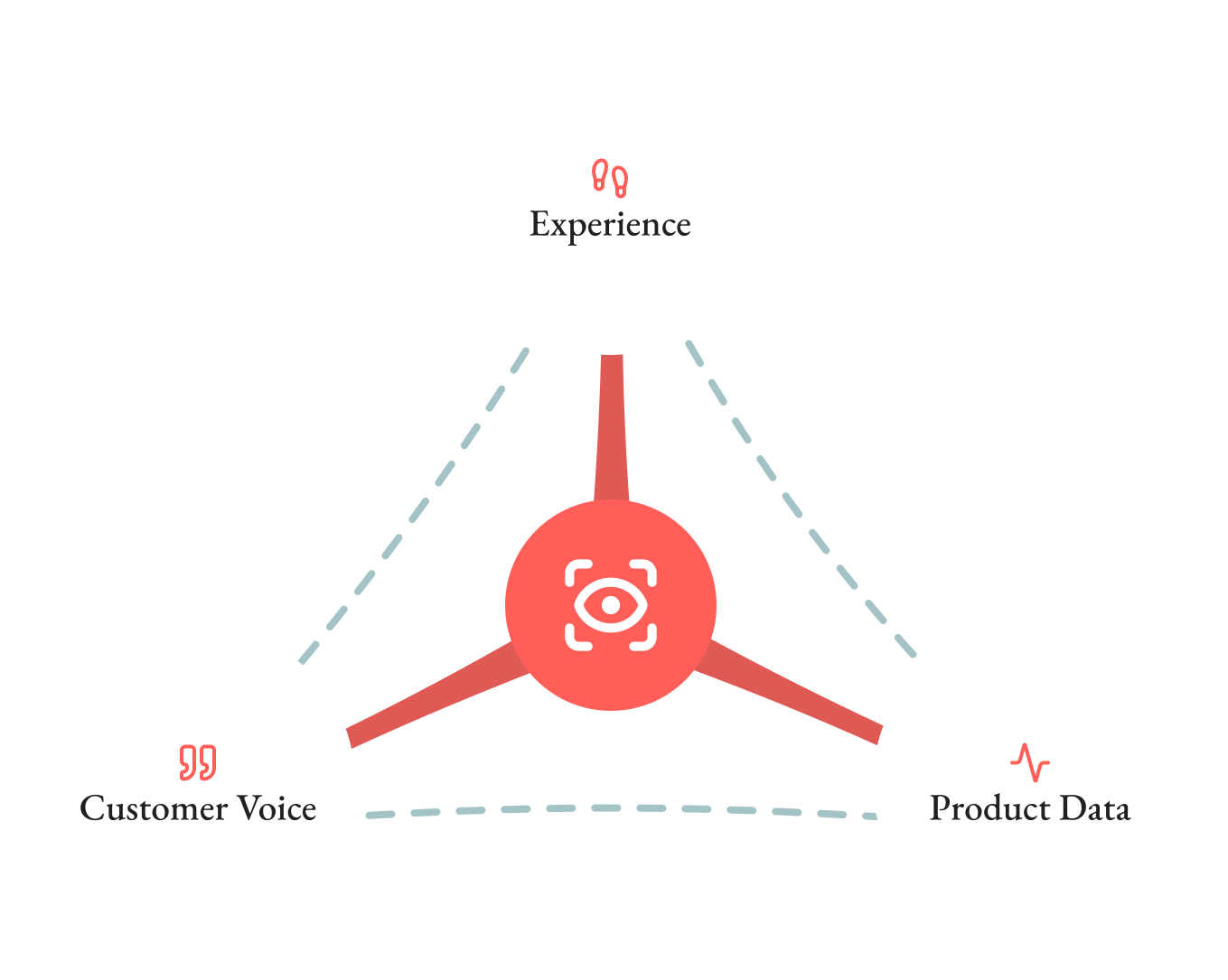
Three lenses, one honest picture

Experience, Voice, and Data, combined so a finding isn't an opinion, it's proof.

See how we work →
Diagram of the Three-Lens Framework: Experience, Customer Voice, and Product Data combined into one confirmed finding.

How it works

Three steps, from scoping to debrief

Step 1

Talk and scope

A working session on what your own diligence team will actually scrutinise, and what to focus on, then we agree access to the data, roadmap, and customers.

Step 2

Assess

We use the product ourselves, dig into the usage data, and talk directly to real customers, not just the ones the founder will say nice things to. Every assessment also covers how exposed the product is to AI-native competitors, and where AI could add value after you buy.

Step 3

Report & debrief

Findings, risks and strengths alike, go into a draft you see first, then your full set of reports, walked through with you once you've read them.

Common questions

What investors usually ask first

How much of the target's team time does this take during our diligence window?

Minimal, one to two hours a week from the founder or product lead. We work around your timeline, not the other way round.

How is this different from our own technical due diligence?

Technical due diligence checks the codebase and infrastructure in depth, and we don't replace it. We check whether the product itself is good: whether customers want it, use it, and would notice if it disappeared. We also flag engineering issues that affect the product, so your technical team knows where to look.

What if the review finds something that changes the deal?

Better before you commit than after. A finding that would move price or terms is exactly what this is for, and it's cheaper to know now than to discover it post-close.

Why we built this

We've seen the gap from both sides

We've worked inside PE-backed companies, assessed the product side of acquisition targets, and helped founders prepare to raise or sell. We've seen financial, legal, and technical diligence be rigorous, every time. The product read almost never is. That's the gap we built Lean Otter to close.

Learn more about us
Portrait of Anna Rasmussen
Anna Rasmussen

Your product, your product-market fit, and how you land your proposition sit at the heart of any business's value. We brought in Lean Otter to look at our product the way a buyer would, and they found opportunities for growth we'd missed from the inside.

OpenBlend

CEO & Founder at OpenBlend & Vokser

Know what's really in the product, before the deal depends on it.