
The Three-Lens Framework
How we work
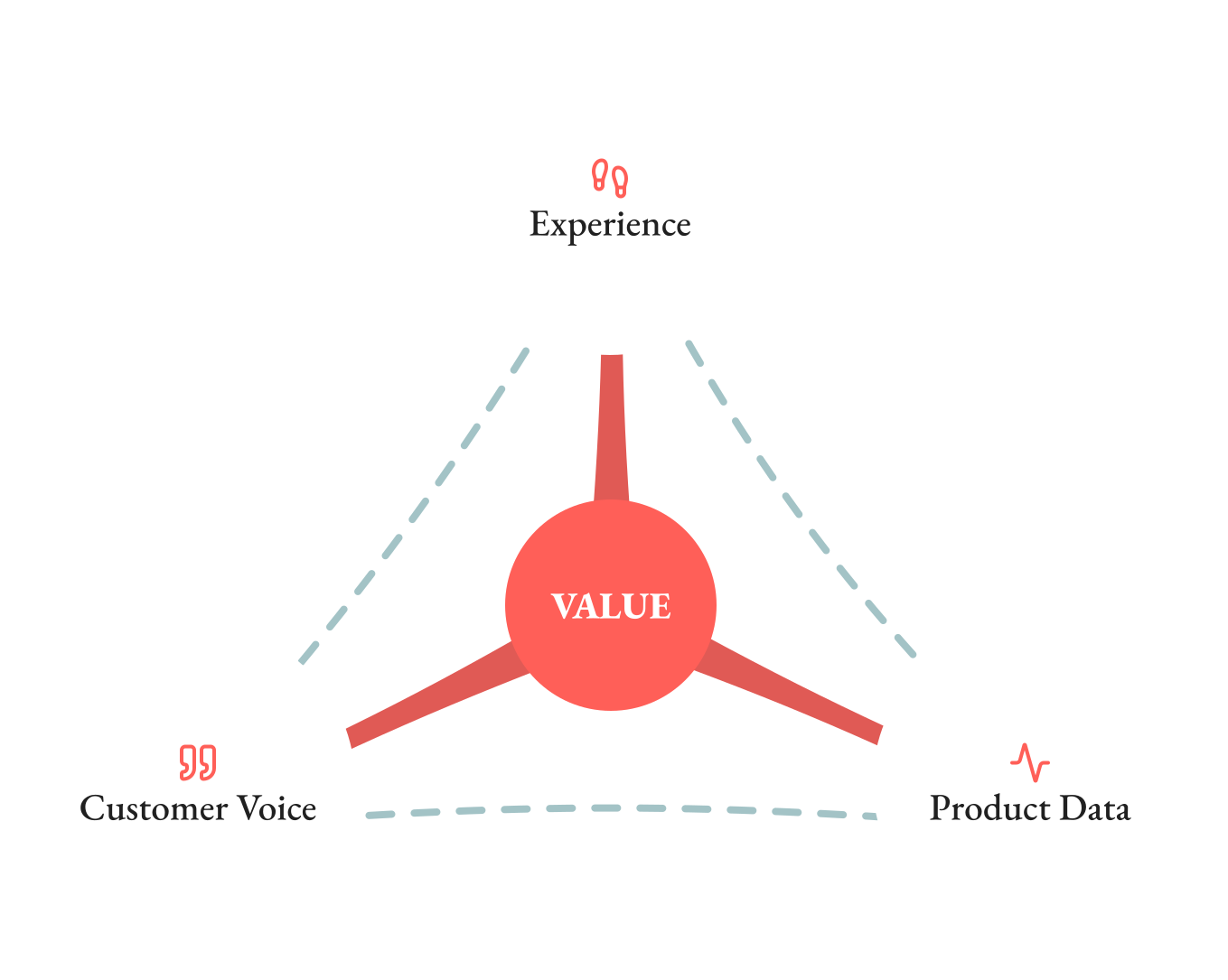
Experience, Customer Voice, and Product Data. Combined, so a finding isn't an opinion, it's proof.
Product diligence never had a proper method
Financial and technical due diligence have mature methodologies. Product never did. Whatever the deal, raising, selling, or buying, the product read has always been a few demo clicks and a look at the roadmap, nobody's actually checking whether it's good enough to justify the numbers either side of it. The three-lens framework closes that gap.
Start with the value
Every review begins with one question: what value does this product offer, to whom, and for which job?
We agree the answer with you in the first working session and write it down in plain words. Everything that follows is measured against it.
What we write down:
-
1
The value the product offers
-
2
The customer it is for
-
3
The job that customer is trying to get done
-
4
The first-value milestone: the moment a new customer first gets a real result
When all three agree, a finding is no longer an opinion. It is proof.
Does the experience actually deliver the value it promises?
We look at whether the product is genuinely designed around the value it's meant to deliver, not just how it looks. That means the core journey, can someone find their way through it, reach what they came for without being shown how, and does the effort it asks for match what they get back. A product can look polished and still fail here, if the workflow's the wrong shape for the job, or the value's real but buried under friction the team's too close to the product to see anymore.
How this lens tests the value: We test whether a new customer can reach the value, and whether the workflow fits the job.
Your Dashboard

"I open five tabs to do what should be one."

Any one lens alone can be argued with
A design critique can be dismissed as opinion. A churn number can be waved off as a one-off account. A customer complaint can be written off as an outlier. But when the experience review finds a design flaw at a specific point, customer interviews describe that exact moment as confusing, and the usage data shows a drop-off at that exact step, that's no longer an opinion. That's a finding, confirmed three independent ways.
Every finding rated from no issue to critical
So you know what needs fixing now, what to keep an eye on, and what would actually change the price or the deal itself.
This isn't a code or security audit, and it isn't a fractional CPO retainer. It's a diagnostic read of whether the product itself is sound. We also flag engineering issues that affect the product, such as technical debt (choices made to move fast that now slow every new feature down) and key-person risk (product knowledge held by one or two people). If something needs a specialist review, we tell you. Where a finding needs follow-on work, we scope that separately.
AI is part of every stage of the review, not a separate add-on. We look at how it could change the product, what customers say they need, and whether your data could support it.